
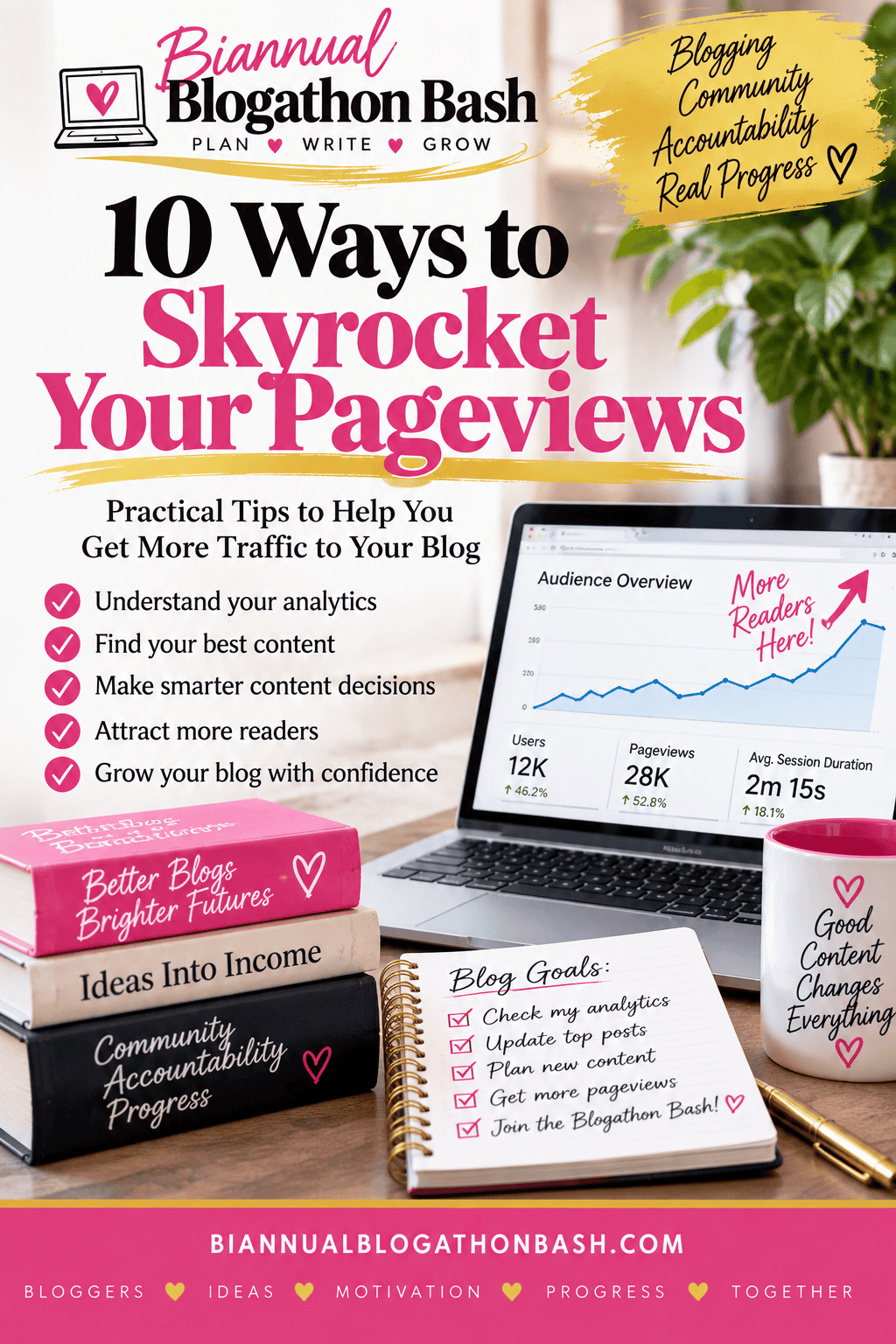
Skyrocket Your Pageviews was an analytics-focused blogging eBook by Kelli Miller and Crystal Lopez that I bought, used and learned from firsthand. This article originally recommended the resource as something readers could purchase. I can no longer verify that the eBook is currently for sale, so this is no longer a sales page. Instead, I am preserving my experience with it and looking at which lessons still matter in the GA4 era.
One of the most frustrating parts of blogging is doing a tremendous amount of work and still not knowing why some content succeeds while other content seems to disappear.
You can write more. You can post more often. You can share links on social media. But none of those things automatically tell you what your readers actually respond to.
That was what made Skyrocket Your Pageviews useful to me. It encouraged bloggers to stop treating analytics as a collection of intimidating numbers and start using the data to make decisions.
That underlying lesson has aged much better than some of the specific analytics instructions.

Why I Originally Bought Skyrocket Your Pageviews
I had already been blogging for years when I found Kelli and Crystal's resource. I wasn't looking for another collection of vague suggestions telling me to create great content and promote it more. I wanted something practical.
Skyrocket Your Pageviews was organized around manageable tasks that pushed me to actually look at my analytics and ask better questions.
Which older articles were still attracting readers? Where were visitors coming from? Which content encouraged people to explore another page? What topics were already showing signs of life that I could build upon?
Those questions are still worth asking today.
The Analytics Have Changed, but the Strategy Hasn't
The original eBook was created in a different analytics era. Google Analytics has changed substantially since then, and bloggers now working in GA4 should not expect old screenshots, old terminology or old benchmark advice to match what they see in their dashboards.
That is important because an older blogging resource can contain a genuinely useful strategy while its step-by-step technical instructions become obsolete.
The strategy I took from this resource was simple: use evidence from your own audience before deciding where to spend more of your limited time.
For a blogger trying to build a business without allowing the blog to consume every available hour, that is an especially valuable principle.
What I Learned From Working Through the Resource
One of my biggest takeaways was learning to use analytics to decide which old posts deserved attention first.
When you have hundreds of articles, "update your old content" isn't particularly helpful advice. Which article should you update? Which one has the best opportunity? Which one is already getting impressions or traffic? Which one leads naturally to another useful article, an email signup, a product or another part of your business?
Looking at the data helped turn an enormous maintenance job into a prioritized one.
I also began noticing content I hadn't thought about in years that was still attracting readers. Instead of assuming newer automatically meant better, I could see where my existing library was already doing some of the work.
That lesson is particularly relevant to what we do here at Building Better Blogs today. An established website is an asset. Its archives shouldn't automatically be thrown away because they are old. Some need updating, some need historical context, some need stronger internal links, and some should simply be preserved as milestones.

Five Lessons From the eBook That Still Hold Up
1. Your analytics should answer questions
Opening an analytics dashboard just to watch a number rise or fall isn't much of a strategy. Start with a question. Which articles bring people in? What content keeps attracting readers over time? What traffic sources are worth the effort you're putting into them? Which pages help readers take a meaningful next step?
2. Your existing content can be one of your best growth assets
You do not always need another new article. Improving a useful post that already has visibility can sometimes make far more sense than starting from zero.
3. Traffic source matters
A pageview is not just a pageview when you're trying to build a sustainable business. Search visitors, email subscribers, social visitors and direct readers may behave differently. Understanding where useful traffic originates helps you decide where your promotional time belongs.
4. Reader behavior can reveal the next piece of content
If one topic consistently attracts readers, that is information. It may deserve a deeper guide, a related article, an email freebie, a product recommendation, a workshop or another resource. Analytics can become part of editorial planning rather than something you check after the work is finished.
5. Data is most useful when it changes what you do
Collecting statistics is not the goal. The value comes from deciding to update a page, improve navigation, add an internal link, create a related resource, stop spending time on an unproductive channel or invest more heavily in something that is demonstrably working.
What I Would Not Carry Forward Unchanged
I would not use old Universal Analytics instructions as a current GA4 tutorial, and I would not rely on generic bounce-rate targets as a scorecard for whether a blog is healthy. Measurement systems, definitions and business models change.
I also wouldn't tell a blogger that reaching one particular traffic number is the point at which a blog becomes monetizable. Bloggers can earn through affiliate relationships, products, services, books, classes, sponsorships, memberships, advertising and other combinations. Some models need significant traffic; others can work with a smaller but highly relevant audience. I go deeper into that idea in how garden bloggers can make money from their content.
That's one reason Building Better Blogs now emphasizes building a business that fits your life rather than chasing somebody else's dashboard.
Who Were Kelli Miller and Crystal Lopez?
Kelli Miller and Crystal Lopez were not simply people who wrote one eBook. Through Learn to Blog, they built a larger blogger-education business around practical training.
Learn to Blog materials described both women as longtime bloggers who moved from running their own sites into teaching other bloggers. Their work expanded beyond eBooks into free educational Hangouts, consulting, classes, conferences and other training resources.
Kelli was associated with 3 Boys and a Dog, while Crystal was associated with Crystal & Co.. By the time Learn to Blog promoted its 2021 Grow Your Blog Virtual Conference, its materials described them as having blogged for more than a decade and having spent nearly ten years training bloggers.
That career path is worth preserving because it illustrates something we see repeatedly in the history of blogging: a blogger can begin by publishing content, develop expertise through doing the work, and eventually turn that experience into education, services, products and a broader business.
Is Skyrocket Your Pageviews Still Available?
As of this September 2026 update, I have not been able to verify a current sales page for Skyrocket Your Pageviews. Older references to the eBook remain online, but that is not enough for me to tell you that you can still buy it.
For that reason, I have removed the old "buy now" language and am not treating the historical affiliate link as a current offer.
If Kelli or Crystal make the original resource-or an updated version of it-available again, this article can be updated with verified information.
What Bloggers Should Do Instead Today
You don't need this particular eBook to put its strongest principle to work.
Choose one question about your blog and use your current analytics and search data to answer it. For example: Which five older posts are already attracting readers and deserve improvement? If you need a current measurement framework rather than an older analytics workflow, GA4 for Bloggers: What to Track and Why It Matters walks through what today's numbers can actually tell you.
Then look at those pages as a reader rather than merely as an author. Is the information current? Does the article answer the question promised by the title? Are there useful internal links? Is there a logical next step? Does it connect to your email list or another owned asset? If monetization is appropriate, does the revenue path genuinely fit the reader's reason for visiting?
That is a much more productive use of analytics than obsessively checking total pageviews. Once you identify the pages worth your time, track whether the work is producing traffic, income or another result that matters to your business.
If your audit gives you a list of improvements you keep postponing, make one of them your Blogathon Finish Line. The Biannual Blogathon Bash gives you a focused block of time to turn the analytics decision into completed work instead of another item sitting on your list.
Put the Numbers to Work
Winter 2027 Blogathon · January 15-17
Found the pages that deserve attention? Bring one of those improvements to the Blogathon and turn the insight into finished work.
See the Winter 2027 Blogathon →My Bottom Line
I am glad I bought and worked through Skyrocket Your Pageviews. It gave me a more practical way to think about analytics and helped me identify opportunities inside content I had already created.
I wouldn't hand a blogger the old resource today and tell them to follow every analytics instruction exactly as written. Technology moved on.
But I absolutely would pass along the larger lesson Kelli and Crystal were teaching: stop guessing, look at what your audience is actually doing, and use that information to decide what deserves your time next.
That principle still belongs in a blogger's toolbox.
From the Building Better Blogs Archive
This article began as my recommendation of Skyrocket Your Pageviews. The original resource graphics and the reader discussion below are being preserved as part of the site's blogging history. The article above has been substantially updated to distinguish my firsthand experience with the original eBook from current analytics guidance.




Nicole Garaham says
Hi, Very Good Article. I really appreciate it. Well researched article. Now you got one regular visitor to your website for new topics. Keep up the Good Work Thanks for always sharing. Nicole Graham
Sheri says
Thank you! I appreciate you leaving a comment.
Sheri Ann