Black Friday affiliate marketing begins long before shoppers start looking for discounts. The bloggers who make the most of the season do more than collect affiliate links. They look at what their readers need, choose products they can recommend with confidence, and publish useful content while people still have time to compare their options.
Start with the articles you already have. Look for product reviews, tutorials, comparisons and gift guides that attract readers or generate affiliate clicks. Open the links, check that the products are still available, and make sure each recommendation explains who the product is for and why it is worth considering. Then decide what is missing. You might need a comparison that answers a common question, a better photograph showing a product in use, or a short section explaining which features matter before someone spends their money.
Once those pages are ready, connect them to a simple promotion plan. Share helpful articles before the shopping rush, email subscribers when a genuinely relevant offer becomes available, and update time-sensitive details as promotions begin and end. Keep the underlying advice useful even when there is no sale. That way, your work continues serving readers instead of becoming another expired Black Friday post.
The opportunity is bigger than posting discounts. Readers are researching purchases, comparing options, planning gifts, watching prices and deciding which recommendations they trust. A blogger who prepares early can meet those readers at several points in that decision process.
The goal is not to persuade people to buy things they do not need. It is to help the right reader choose the right solution - and earn a commission when a useful recommendation leads to a purchase.
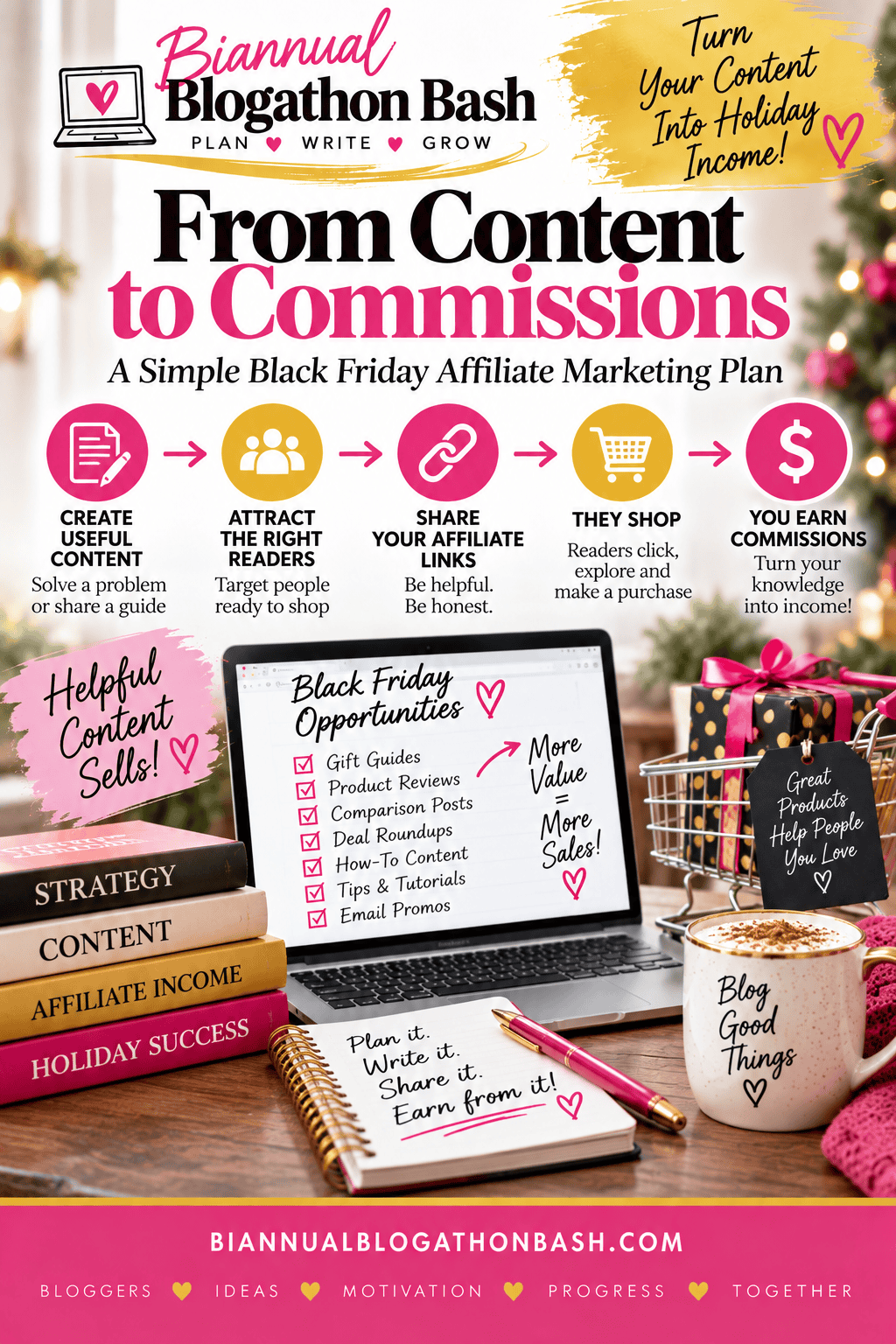
Start Black Friday Planning Before Black Friday
The original version of this article emphasized early-bird strategy, and that remains important. If you wait until Black Friday morning to begin, you are competing for attention at the noisiest possible moment.
Start by reviewing the previous holiday season. Look at your analytics, affiliate reports, search traffic, email performance and reader questions. Which pages attracted shoppers? Which products generated clicks? Which recommendations actually converted? Which content received traffic but did not move readers toward a useful next step?
Then look at what is already happening this year. Retailers may begin holiday promotions well before Thanksgiving, while readers often research expensive or complicated purchases before a discount appears.
This gives you time to publish useful comparison, review and buying-guide content before everyone begins shouting about deals.
Research What Your Readers Actually Want
The old article recommended researching Black Friday trends and popular products. Keep doing that - but do not let broad shopping trends replace what you know about your own audience.
Start with your readers:
Begin with what your own readers have already shown you. Check which products receive affiliate clicks, which questions people ask in comments, email and social conversations, and which older buying guides attract search traffic. Think about the problems readers are trying to solve, the purchases that naturally fit your niche, and the price ranges or product categories that have converted in the past.
Then layer outside research on top of that information. Search trends, retailer best-seller pages, product launches and current promotions can reveal opportunities, but relevance should come first.
A high commission does not make an offer a good fit. A smaller group of highly relevant recommendations can outperform a giant list of unrelated deals because readers understand why you are recommending them.
Study Competitors Without Copying Them
Competitive research was another useful part of the original article.
Search the topics and products you plan to cover. Look at what already exists. The purpose is not to duplicate another blogger's gift guide or imitate the top-ranking page. Look for what is missing.
Perhaps competing articles list products without explaining who should choose each one. Maybe they ignore an important comparison, fail to discuss limitations, or offer no firsthand perspective. Perhaps the search results are filled with generic lists when you can contribute actual experience.
Ask: What can my article add that makes the reader's decision easier?
That is a more durable competitive advantage than simply publishing a longer list.
Define What Success Means Before the Campaign
Black Friday activity can create impressive-looking numbers without necessarily creating a profitable campaign. Suppose one article attracts a thousand visits and sends fifty readers to a merchant, while another attracts only two hundred visits but sends thirty readers who are actively comparing a product. The second article may be more valuable even with less traffic. To find out, look beyond page views and record which articles generate affiliate clicks, which merchants report orders, and what commissions are actually earned. Not every program reports the same information, so keep your notes simple enough to maintain.
For example, a blogger could use a spreadsheet with one row for each article and columns for the article URL, product category, affiliate program, outbound clicks, reported orders, commission earned and the date the figures were checked. Comparing those numbers over time can reveal whether a detailed review deserves an update, whether a gift guide sends poorly matched traffic, or whether an email campaign reaches readers who are ready to make a decision. The purpose is not to chase a perfect dashboard. It is to spend the next round of work on content that genuinely helps readers and supports the business.
Decide what you are trying to accomplish. Possible goals include affiliate revenue, product sales, qualified traffic, email growth, clicks to specific merchant partners or increased revenue from existing high-traffic content.
Then choose measurements that match the goal.
If affiliate income is the objective, impressions alone are not enough. Track clicks, conversions and earnings where your programs provide that data. If you are building your email audience, watch both subscriber growth and what those subscribers do afterward.
Clear goals also make it easier to reject opportunities that consume time without supporting the business.
Audit Existing Affiliate Content Before Creating More
Some of your best Black Friday opportunities may already exist.
Review articles that generated affiliate clicks or sales previously. Check:
For each existing recommendation, confirm that the product is still available and that you remain approved for its affiliate program. Test the tracking link, check the specifications and claims, and update any price information that is no longer accurate. Consider whether a better alternative should be added or a discontinued recommendation removed. Make sure the disclosure is clear, the article answers current buyers' questions, and useful internal links connect it to related holiday content.
Updating proven content is often more valuable than publishing ten new generic "best Black Friday deals" posts. If you are reviewing your broader seasonal income opportunities at the same time, the related guide to fall monetization tips for bloggers offers another way to think about the work you already have.
Create Content for Decisions, Not Just Deals
A temporary discount can attract attention, but the strongest affiliate article helps a reader decide. Imagine a blogger who has used two different food dehydrators and wants to help readers choose between them. Rather than opening with a list of sale prices, the blogger can explain how much food each machine holds, how evenly the trays dry, how much counter space it needs, and what cleaning it involves. Photographs from actual use and a clear explanation of what did not work as expected make the comparison more valuable than a generic product roundup.
That same approach works whether your niche is gardening, crafts, technology, home organization or blogging tools. A reader comparing two email services needs to understand subscriber limits, automation features and the cost of upgrading. Someone shopping for a sewing machine may care more about reliability, repairs and ease of threading than a long feature list. The job of the article is to connect meaningful differences to the reader's situation, then explain where an affiliate recommendation genuinely fits.
Build the comparison before any sale begins. When a merchant confirms a promotion, you can add a clearly dated offer note and remove it after the promotion ends without changing the evergreen buying advice. This protects the value of the article and saves you from rebuilding it every holiday season.
Useful buying content answers questions such as:
Explain who a product suits and who should skip it. Describe the problem it solves, the differences between competing options, and the features that matter in everyday use. Readers also need to know about necessary accessories, additional purchases and limitations. Address whether a less expensive choice is sufficient and when a premium version might genuinely be worth the extra cost.
Firsthand experience is especially valuable when you have it. Show readers what you learned from actually using a product. Explain what surprised you, what worked well, what did not and who you think would benefit.
If you have not used something, do not write as though you have. You can still create useful research-based content, but be clear about the basis of your recommendation.
Use Storytelling Without Manufacturing a Problem
The original article included what I called the "narrative ribbon": taking readers through a problem, the objections or concerns surrounding it, and the way a product might help resolve it.
That idea is worth keeping because affiliate marketing becomes much more useful when a product is placed in context.
Instead of beginning with "Buy this," begin with the real situation. What were you trying to accomplish? What options did you consider? What concerned you? What did you discover after using the product?
A useful narrative might move through:
A useful story starts with the real problem or goal, then explains what you tried or considered and which questions or objections mattered along the way. Describe why you chose a particular solution, what happened when you used it, and who you would or would not recommend it to. That gives the reader experience they can apply to their own decision rather than an invented sales narrative.
This is different from exaggerated pain-point marketing. You are not trying to make readers feel worse so they will buy. You are showing how a product fits into an actual experience.
Publish Buying Content Before the Final Prices Are Known
You do not need every Black Friday price before publishing useful content.
A comparison between two products can explain their differences year-round. A review can answer questions before the sale. A buying guide can help readers decide which features matter.
When promotion details become available, update the relevant section rather than building the entire article around a temporary price. This also makes the page easier to return to evergreen usefulness after the sale ends.
Build Anticipation Without Creating Hype
The original article recommended early-bird content, previews and countdowns. Those tactics can still work when they communicate something real.
If a brand has confirmed an upcoming promotion you are allowed to discuss, tell readers when it begins. If your own product has a planned sale, announce the real deadline. If you are building a curated deal page, tell subscribers when you expect it to be updated.
What you should not do is manufacture urgency. Do not invent limited stock, fake countdowns or pretend a routine price is an extraordinary deal.
Black Friday already provides plenty of legitimate urgency. Use accurate dates and terms and let readers decide.
Create a Black Friday Content System
You do not need dozens of new posts. Build a small group of assets that serve different parts of the buying decision. For a broader look at planning a holiday blogging campaign, see Unlocking Black Friday Earnings: Blogging Strategies for Success. Use that planning perspective alongside the affiliate-specific decisions in this guide rather than creating several articles that all repeat the same advice.
Evergreen buying guides
Teach readers how to choose. Explain features, tradeoffs, price ranges and what matters for different users.
Product comparisons
Compare products readers genuinely consider together. A useful comparison explains differences rather than simply declaring a winner.
Firsthand reviews
Show how the product performed in real use. Include limitations and the type of person you think should buy something else.
Curated deal pages
If your audience benefits from a deal roundup, keep it selective and maintain it carefully. Remove expired offers rather than leaving readers to discover dead promotions.
Use email to point readers toward useful resources and meaningful promotions. Do not turn a trusted subscriber relationship into an endless stream of sale alerts.
Social content
Use social posts to surface your strongest resources, demonstrations, comparisons and real-time information. Avoid dumping bare affiliate links without context. Instead of writing a separate sales pitch for every platform, consider adapting one genuinely helpful article into several formats. The guide to repurposing one blog post into 13 or more pieces of content explains how to do that without starting from scratch each time.
Add a Useful Content Upgrade
The original article suggested content upgrades, and the idea still works when the upgrade saves the reader time or helps them make a decision.
Possible Black Friday resources include:
The content upgrade should make the reader's next step easier. Depending on your niche, that could be a printable shopping planner, a comparison worksheet for an expensive purchase, a gift-planning checklist, a research list to use before sale week, a budget worksheet, or a short guide to the questions worth asking before buying a particular type of product.
Do not create a download merely to collect an email address. Make it useful enough that you would be comfortable giving it to an existing subscriber with no opt-in required.
Use Email as a Service, Not a Firehose
Black Friday email works best when subscribers can understand why you are contacting them.
A simple campaign might look like this:
Before sale week, send subscribers a useful buying guide, comparison or preparation resource. When a genuinely relevant sale begins, explain what changed, who the offer fits, and where to find your full recommendation. If a real deadline approaches, a final reminder can help readers who were already considering the purchase. After the rush, return to the usual relationship with subscribers instead of manufacturing another deadline.
If you have enough information to segment subscribers by interest, use it. Someone who consistently reads gardening content does not necessarily need every technology promotion you receive.
Follow Each Affiliate Program's Rules
Affiliate programs differ in where links can appear, how pricing can be displayed, whether links can be placed in email or social posts, how trademarks may be used, what promotional claims are allowed and what disclosures are required.
Do not assume rules from one network apply to another. Review current terms before a major campaign, especially when you are adding a new promotion channel.
Disclose Clearly
Readers should understand when you may earn from a recommendation.
Place disclosures where people can reasonably see them before or near affiliate recommendations rather than hiding the relationship on a distant policy page.
Your disclosure does not need to sound apologetic. Affiliate revenue can support useful free content. Transparency is simply part of the relationship.
Your Black Friday Pre-Publish Checklist
Before promoting an article or email, check the details rather than assuming last year's setup still works.
Before publishing, open every important affiliate link and confirm that it works and that you are still enrolled in the program. Verify promotion dates and terms directly with the merchant, remove discontinued products, and check whether price statements are both current and permitted. Read the disclosure as a visitor would, then review the page on a phone. Test calls to action, inspect images and product names, add links to relevant reviews and buying guides, and decide in advance which temporary details will need to be removed when the promotion ends.
This checklist is deliberately boring. Boring checks prevent lost commissions and frustrated readers.
Think Beyond Black Friday
The shopping period extends through Small Business Saturday, Cyber Monday and the rest of the holiday season. More importantly, your content can continue earning long after those dates.
Build evergreen sections that remain useful after temporary promotions disappear. When a sale ends, remove expired claims and return the article to its year-round purpose.
If you operate your own small business, Small Business Saturday may deserve its own attention rather than being treated as an afterthought to major-retailer affiliate promotions.
Plan the Post-Sale Cleanup Before the Sale
Temporary promotions create maintenance work. Put that work on the calendar before you publish.
After the promotion ends:
When the sale ends, remove expired promotional language and check whether temporary affiliate links should point back to evergreen product pages. Update deal articles so late visitors are not misled, and record performance while the results are still easy to find. Make notes about what you would repeat or change in a future season, then restore any useful seasonal material to an evergreen form whenever possible.
This prevents your site from accumulating years of expired Black Friday claims.
Track What Actually Produced Revenue
After the season, record more than total commissions.
For each important promotion, capture whatever data your platforms make available:
For each article or campaign, record the page promoted, its traffic source, the merchant or affiliate program, clicks, reported orders or conversions, commissions, and email clicks when those figures are available. Include the time spent creating or updating the content and a few notes about what seemed to work. Keeping these details together makes it easier to compare the return on your effort instead of judging success by traffic alone.
A post that earned $300 from a two-hour update may deserve more attention next year than a campaign that earned $350 after twenty hours of work.
For a broader measurement framework, read Tracking What's Working and Making Money.

Protect Your Time During Q4
Black Friday can create the feeling that you must chase every program, deal and platform at once.
You do not.
Prioritize offers that fit your audience and content you can maintain accurately. Schedule what can be prepared early. Keep a simple tracker for promotions and expiration dates. Ignore opportunities that require a large amount of work for very little likely return.
If you are planning the whole season, see How to Build a Fall Content Calendar Without Burning Yourself Out.
Your Action Plan
If you want to put this guide to work instead of simply reading it, do these seven things:
Begin by reviewing the previous season's affiliate and traffic results. Choose a manageable group of product categories that fit your audience, then identify existing articles worth updating before creating anything new. Improve the buying guides, comparisons and reviews people need while researching purchases, and prepare email and social promotion around those resources. For every temporary offer, plan the publication checks and the date-sensitive cleanup. Finally, review the results after the season so the next campaign builds on what you learned.
The strongest Black Friday affiliate strategy is not the one with the most links. It is the one that helps readers make better decisions, earns revenue from recommendations you can stand behind, and leaves you with useful content and data after the sale ends.




Leave a Reply